
Marketing
Tagging 101: Stop Blasting Everyone the Same Message
Your list is not one audience. It's five or six, and they're all getting the same email.
You have 1,200 people on your list. Last week you sent every one of them the same email about your spring retreat in Portugal. Forty-one unsubscribed. Three wrote back to say they live in Ohio and a flight is not happening. One past guest, who has been to four of your retreats, got a warm explanation of what a retreat is.
That's not a content problem. Your writing was fine. The problem is that you talked to a crowd as if it were a person.
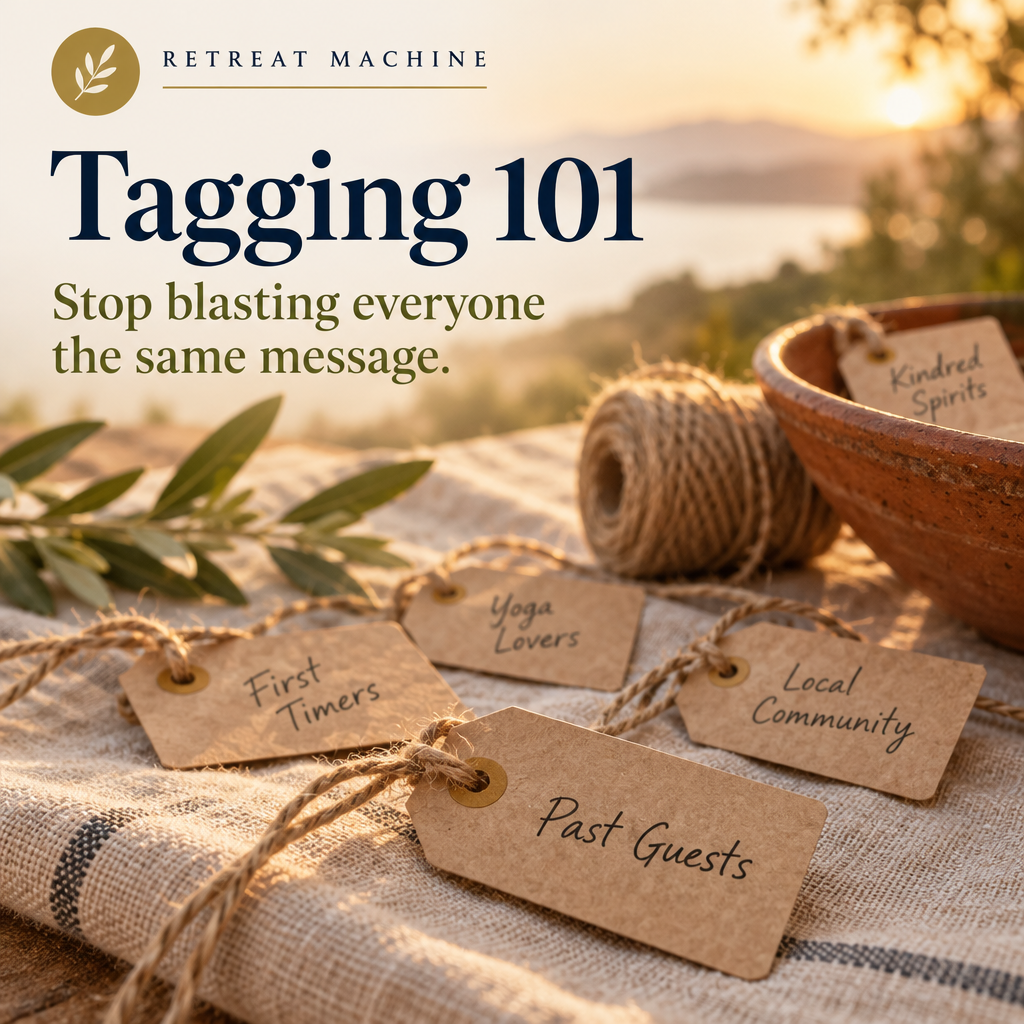
A tag is a sticky note. That's it.
Tagging sounds like tech homework, so people avoid it for years. Skip the fear. A tag is a label your email tool sticks onto a contact so you can find them later. "Went to Costa Rica." "Downloaded the packing list." "Clicked on the January retreat."
Think of a friend who remembers who's vegetarian and who just had a baby. Tags give your list that memory, so you don't have to hold 1,200 people in your head. Because you can't. Nobody can.
Start with five tags. Not fifty.
Most leaders go wrong by building a taxonomy worthy of a library. Then they never use it, because it's exhausting. Start small.
- Source. Where they came from: Instagram, a podcast guest spot, a friend's referral, your quiz.
- Interest. What they raised a hand for: yoga retreats, writing retreats, a specific destination.
- Past guest. Yes or no. This one tag will earn you more money than the other four combined.
- Waitlist. They asked about a specific retreat and haven't booked.
- Engaged. They opened or clicked something in the last 60 days. That's the whole system for now. Five labels. You can add more once these are doing real work.
Let the tags apply themselves
If you're hand-tagging contacts, you'll quit by Thursday. The trick is to attach tags to actions. Someone fills out your waitlist form, the tag goes on. They click the link about the writing retreat, the interest tag goes on. They buy a spot, "past guest" goes on and "waitlist" comes off.
Every decent email platform can do this. It takes about twenty minutes per trigger the first time, and then it runs forever while you sleep, teach, or stare at a lake. This is where tagging stops being admin and starts being a quiet employee.
What it changes
Here's the same Portugal announcement, sent three ways.
Past guests get it first, with a note that says you saved them a spot before opening it up. They are your warmest people. Treat them that way.
Waitlist contacts get the details and the deposit link, because they already asked. No convincing needed.
Cold subscribers who joined last month get a softer story about why you run this retreat at all, with no hard ask. They don't know you well enough yet.
Same retreat, three emails, and every one lands closer to where that person actually is. Open rates climb. Unsubscribes drop. Bookings go up because the right people saw the right message at the right moment. No magic involved, just a sticky note.
Don't build a forest
You'll be tempted to tag everything. Resist. A tag you never send to is clutter, and clutter makes you avoid the system entirely.
Before you create a tag, finish this sentence: "I will use this tag to send ____ to ____." If you can't fill that in, you don't need the tag.
Your move this week
Open your email platform and create exactly three tags: "past guest," "waitlist," and "engaged." Then tag your past guests by hand. Even if it's 40 people, do it in one sitting with a coffee.
Next time you announce anything, send past guests their own version first. Even two sentences of difference counts. Watch what happens to replies.
> Your list isn't a crowd. It's a room full of people at different doors, and a tag tells you which door each one is standing at. You know how to run a retreat. We teach you how to build the business behind it.
Keep Reading
One useful idea a week for retreat leaders.
New articles, podcast episodes, and quiet behind-the-scenes notes from the studio.
Keep reading
Related articles



From the podcast
Related episodes
From the shop
Tools that pair with this

Threshold
Help people discover who they are after the career ends—and give yourself a transformational retreat that's ready to launch.

The Book of Icebreakers
Twelve proven experiences that turn strangers into a community.

The Severance — Done-For-You Retreat
Help women rediscover who they are after losing their careers—and give yourself a transformational retreat that's ready to launch.